A basement wet bar is the amenity that quietly turns a finished basement into the spot everyone actually wants to hang out in. Movie night, game day, the neighborhood gathering that mysteriously ends up in your basement every single time, they all revolve around the bar. Whether you want a sleek cocktail station or a full game-day command center, here are basement wet bar ideas that look great and, more importantly, get used.
Wet Bar vs Dry Bar: Which Do You Need?
The first fork in the road. The difference between a wet bar and a dry bar is plumbing.
- A dry bar has cabinets, counter space, and often a beverage fridge, but no sink. It is cheaper and simpler because there is no plumbing to run.
- A wet bar adds a sink with running water and a drain, which means real plumbing and, usually, a permit. The payoff is convenience: rinsing glasses, prepping cocktails, and cleanup all happen right there instead of upstairs.
If your basement already has plumbing nearby, from a bathroom or the main stack, a wet bar gets much more affordable. If not, a dry bar with a beverage fridge delivers most of the fun for less money.
Basement Bar Layouts
Match the layout to your space and how you entertain:
- Straight-line bar. A single run of cabinets and counter against a wall. Simple, space-efficient, and the most budget-friendly.
- L-shaped bar. Wraps a corner to add counter and storage, great for a little more prep room.
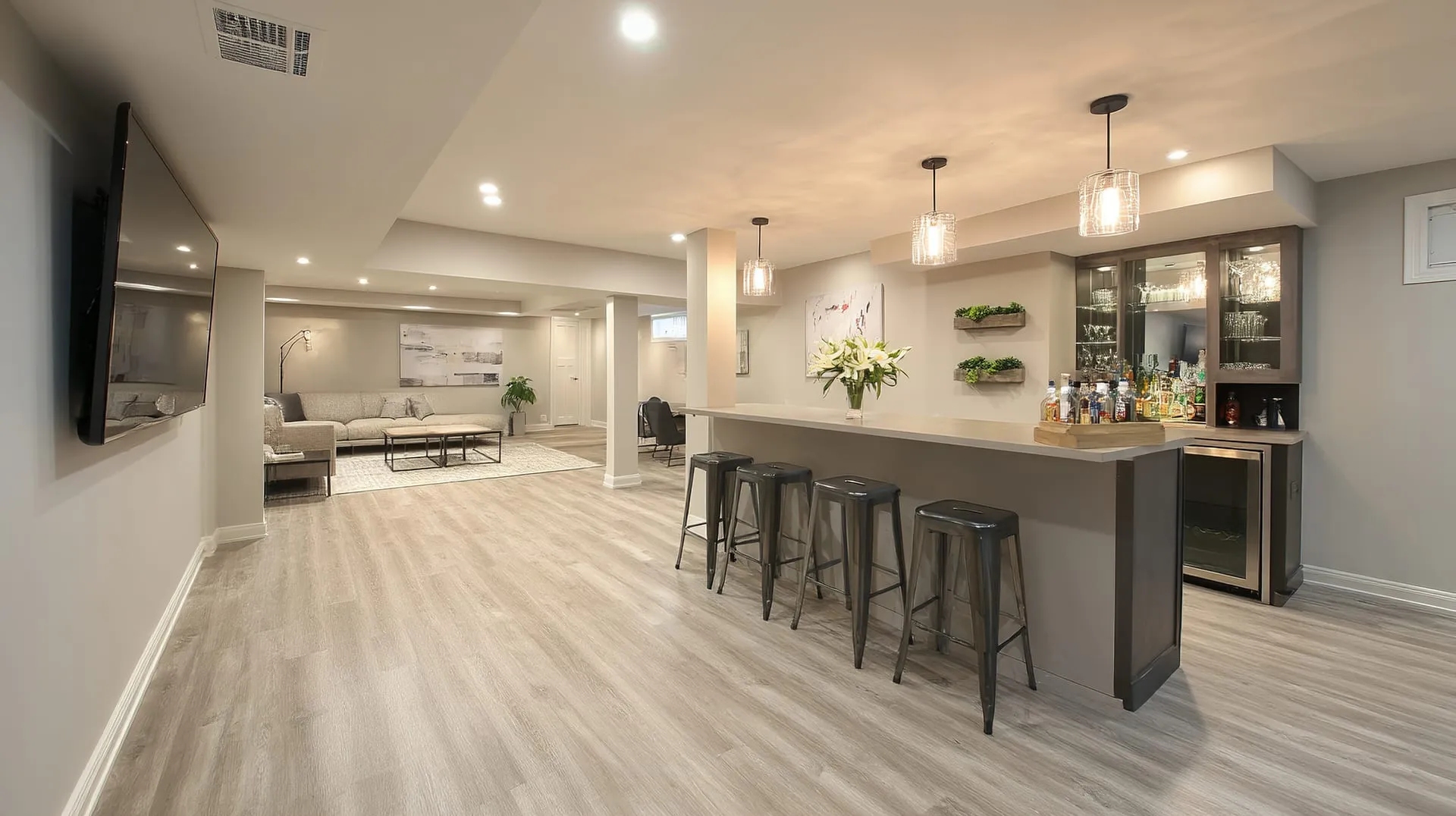
- Bar with seating peninsula. A raised or counter-height overhang with stools, so guests can sit and chat with whoever is pouring. This is the layout in most of the basements people remember.
- Full bar with back wall. Cabinets and open shelving behind the bar for glassware and bottles, plus a wine or beverage fridge built in. The showpiece option.
What Goes Into a Custom Wet Bar
The details are what make a custom wet bar feel built-in rather than bolted-on:
- Cabinetry and counter. Match or complement your kitchen for a cohesive look, or go bold with a darker cabinet and a stone top to set the bar apart.
- A beverage or wine fridge. The single most-used feature in any home bar.
- The sink and faucet. A small bar sink is plenty for a wet bar.
- A statement backsplash. Tile behind the bar is where you can have fun, since it is a small area with big visual impact.
- Lighting. Pendants over the bar and LED strips under the upper cabinets or shelves make the whole zone feel like a real bar at night.
- Open shelving or glass-front uppers to show off glassware and bottles.
What a Basement Wet Bar Costs
Cost tracks closely with the wet-versus-dry decision and the finishes. A simple dry bar with stock cabinets and a beverage fridge is the affordable end. A full custom wet bar with plumbing, a bar sink, stone counters, a wine fridge, and a tiled back wall sits at the higher end. Running new plumbing to a spot far from existing lines is usually the biggest single cost driver, which is why bar placement near existing plumbing saves real money. A wet bar is almost always built as part of a larger basement project, so see our cost to finish a basement guide to place it in the overall budget.
Build It Into the Basement Plan
A wet bar is easiest and cheapest to build when it is designed into the basement finishing project from the start, so the plumbing, electrical, and layout are planned together rather than retrofitted later. If you are planning the whole space, start with our overview of basement remodeling in Northern Virginia. And since a bar involves plumbing on a slab, it is worth reading up on basement floor cracks and moisture before you build, so the foundation is solid first.
Serving Prince William & Fauquier County, VA
Timeless Builder Group designs and builds basement wet bars and dry bars as part of full basement finishing projects across Prince William County, including Manassas, Woodbridge, Gainesville, and Haymarket, and Fauquier County, including Warrenton and Bealeton. We plan the plumbing, cabinetry, and electrical together so your bar looks custom and works flawlessly.
Frequently Asked Questions
What is the difference between a wet bar and a dry bar?
A wet bar has a sink with running water and a drain, while a dry bar does not. The wet bar is more convenient for prep and cleanup but requires plumbing and usually a permit, so it costs more. A dry bar with a beverage fridge is a simpler, cheaper alternative.
Do you need a permit for a basement wet bar?
Adding a wet bar with a sink involves plumbing and often electrical work, which typically requires a permit and inspection. This is usually handled as part of the larger basement finishing permit. A dry bar with no plumbing generally does not.
How much does a basement wet bar cost?
It depends heavily on wet versus dry, the cabinetry and counters, and how far plumbing has to run. A simple dry bar is the affordable end, while a full custom wet bar with a sink, stone counter, and wine fridge sits at the higher end. Placement near existing plumbing is the biggest way to save.
Where should I put a wet bar in the basement?
Ideally near existing plumbing, such as a basement bathroom or the main stack, to keep plumbing costs down, and within sight of the main living or entertainment area so it becomes a natural gathering spot.
Ready to build the basement bar your friends will never leave? Timeless Builder Group is a licensed remodeling and custom home building company serving Manassas, Woodbridge, Gainesville, Fairfax, and communities across Northern Virginia. Call 703-520-3477 or request a free estimate, and let’s design a wet bar that fits your space, your style, and your weekends.